top of page

FINE ART INSPIRATIONS

01
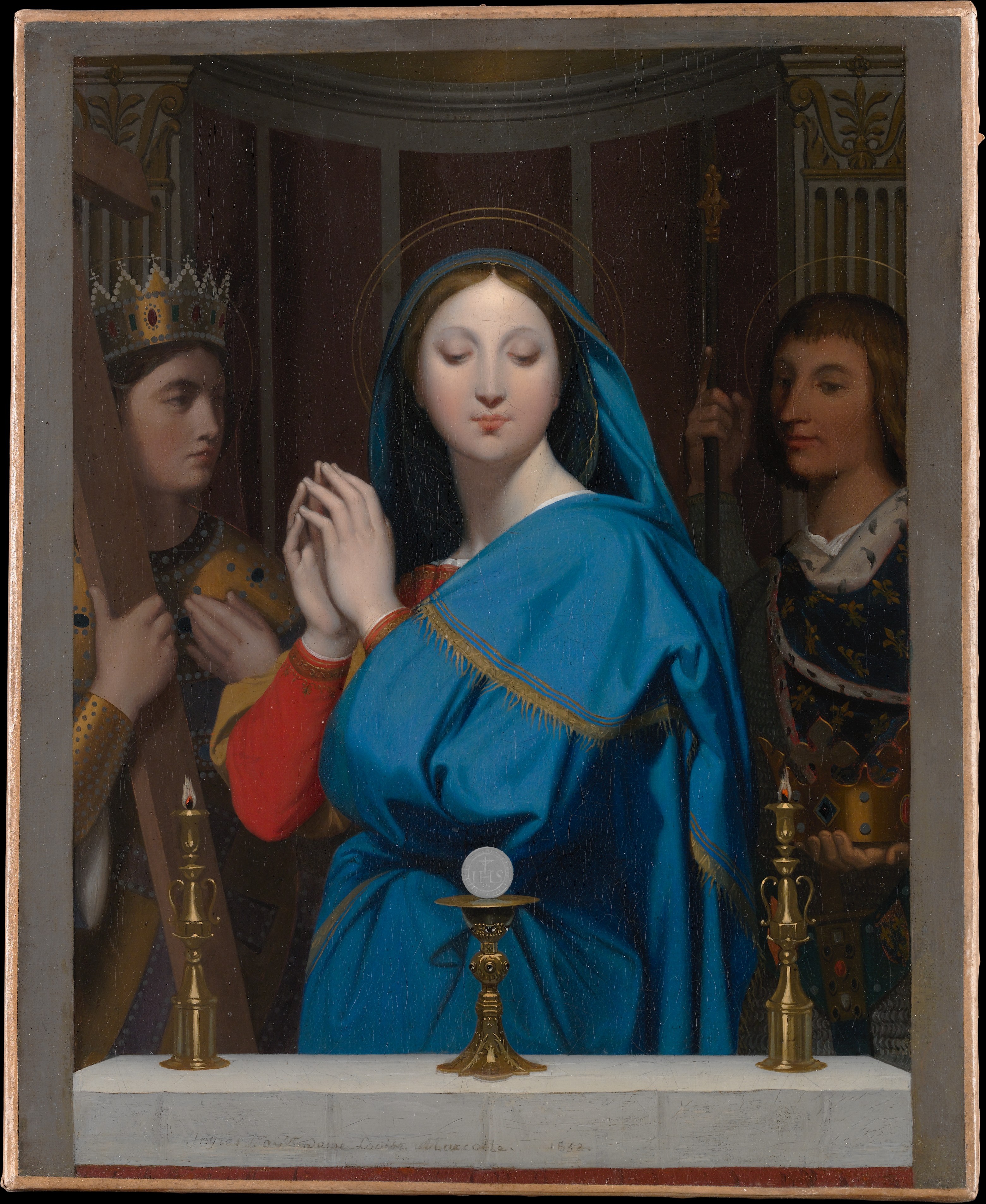
The Virgin Adoring the Host
Jean Auguste Dominique Ingres French
1852
On view at The Met Fifth Avenue in Gallery 801
Ingres made this small, jewellike devotional painting as a gift for his friend Louise Marcotte; she introduced the artist to Delphine Ramel, whom he married in 1852. The Virgin appears behind an altar table, flanked by two saints in adoration of the Eucharist. The composition pays homage to the long tradition of intimate paintings made for religious devotion, particularly the art of Raphael from the early 1500s.
.avif)
02
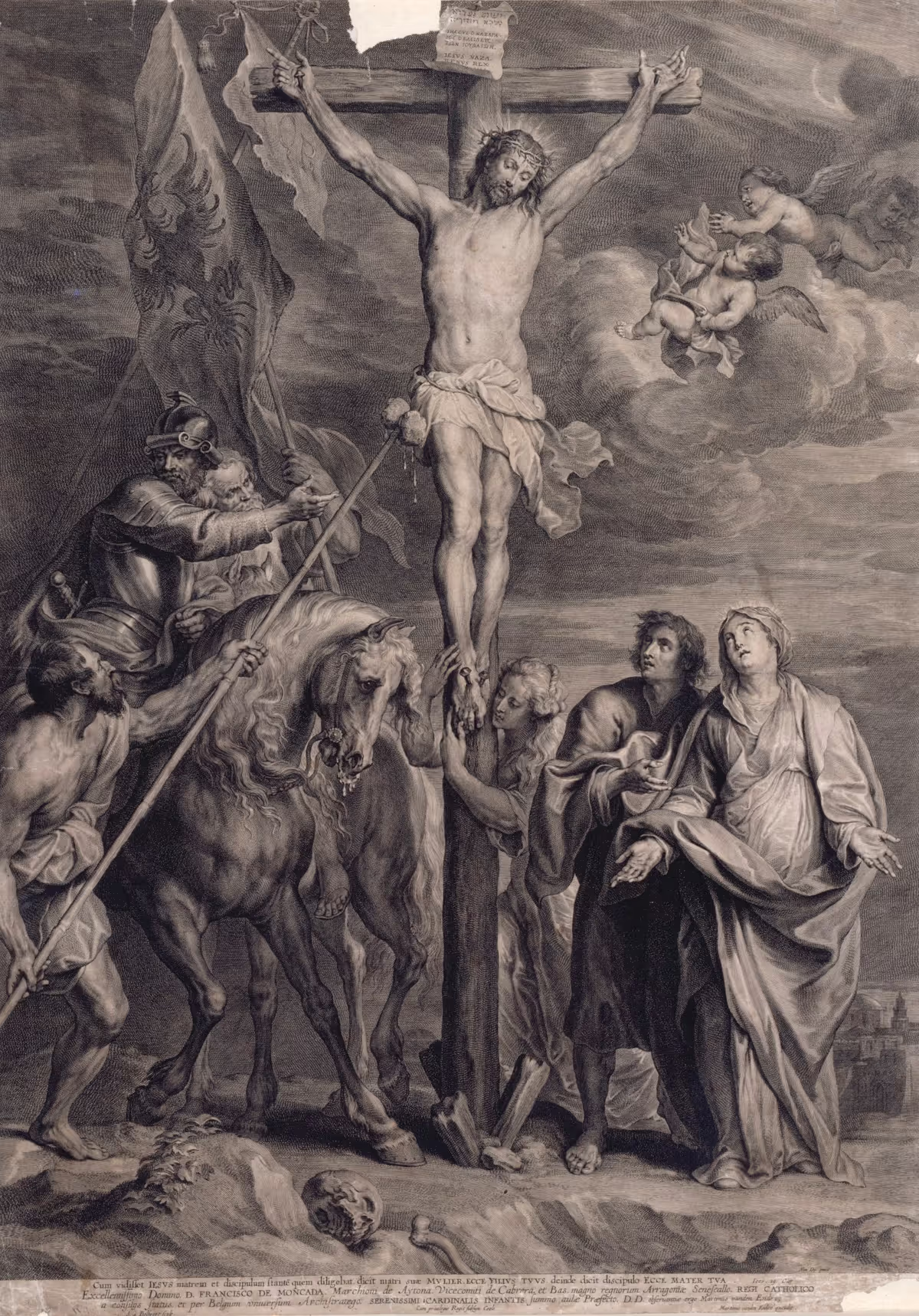
Christ Crucified with the Virgin Mary, St John, Mary Magdalene and Soldiers, ca. 1640
After Anthony Van Dyck (1599 - 1641)

03
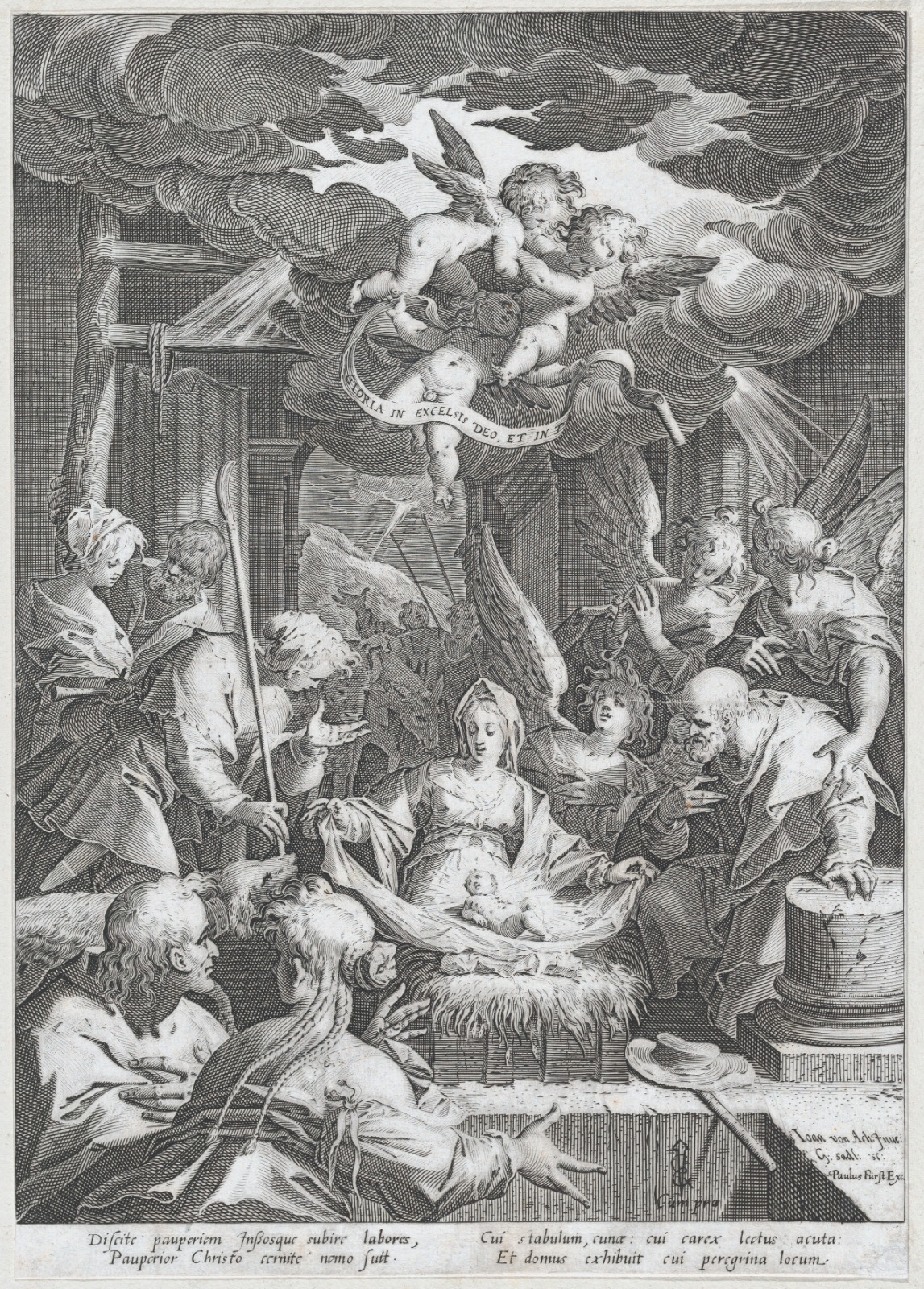
Nativity
Aegidius Sadeler II Netherlandish
After Hans von Aachen German
Publisher Paulus Fürst German
1588

04
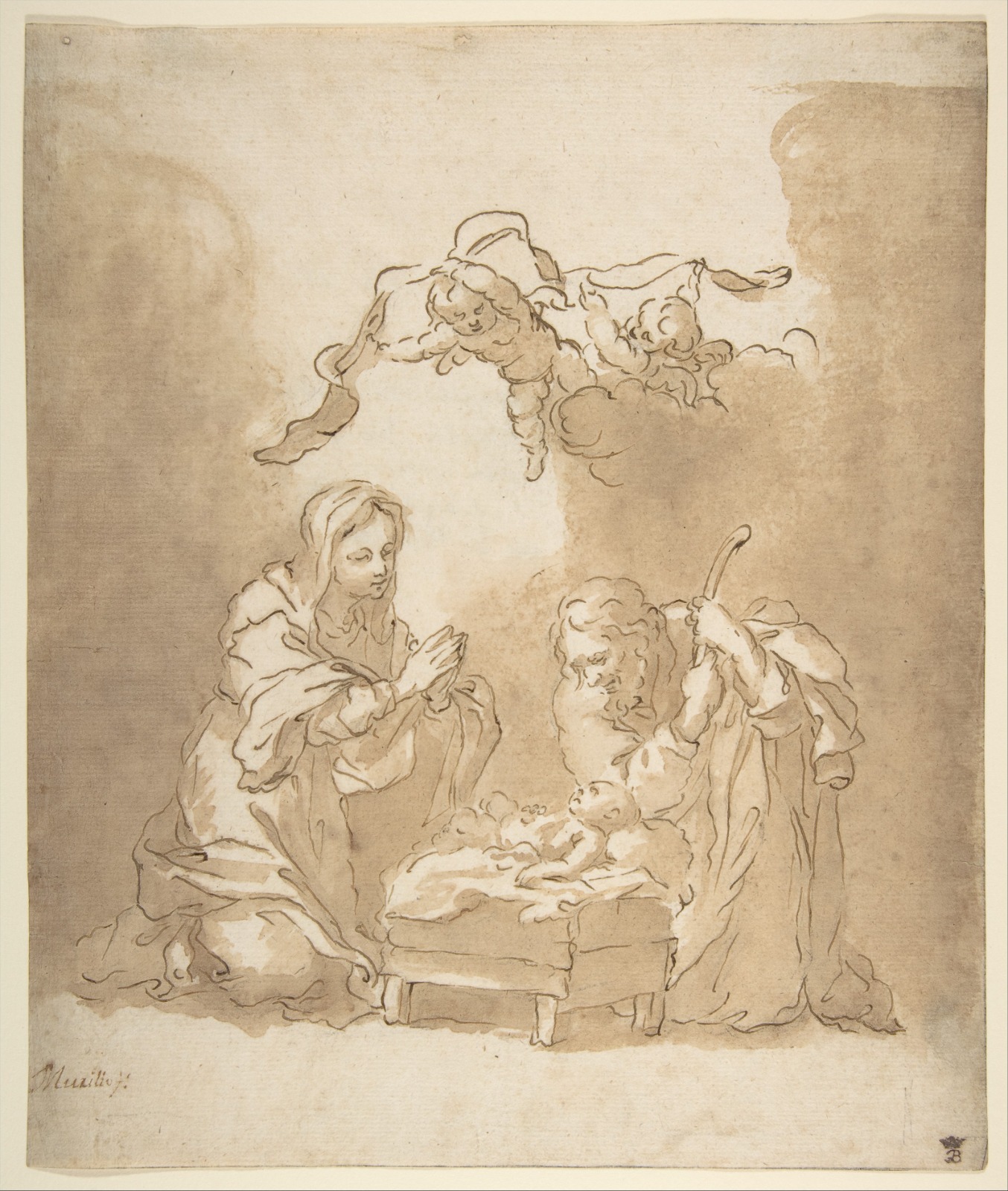
The Nativity
Bartolomé Estebán Murillo Spanish
ca. 1665–70
One of the best known of all Spanish artists, Murillo spent most of his life in Seville, where he established an important drawing school. Many sheets from his hand have survived. This drawing is typical of the finished compositions he made late in his career. It is carefully signed in the lower left, and the letters "fe" after his surname are an abbreviation of the Latin fecit, or "made by." Many of Murillo’s drawings were preparatory sketches for paintings. However, given his fame and his role as a teacher, it is possible that he made this drawing as an independent work, perhaps to be sold to a collector.
%2C%20L'Ultima%20Cena.jpg)
05
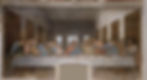
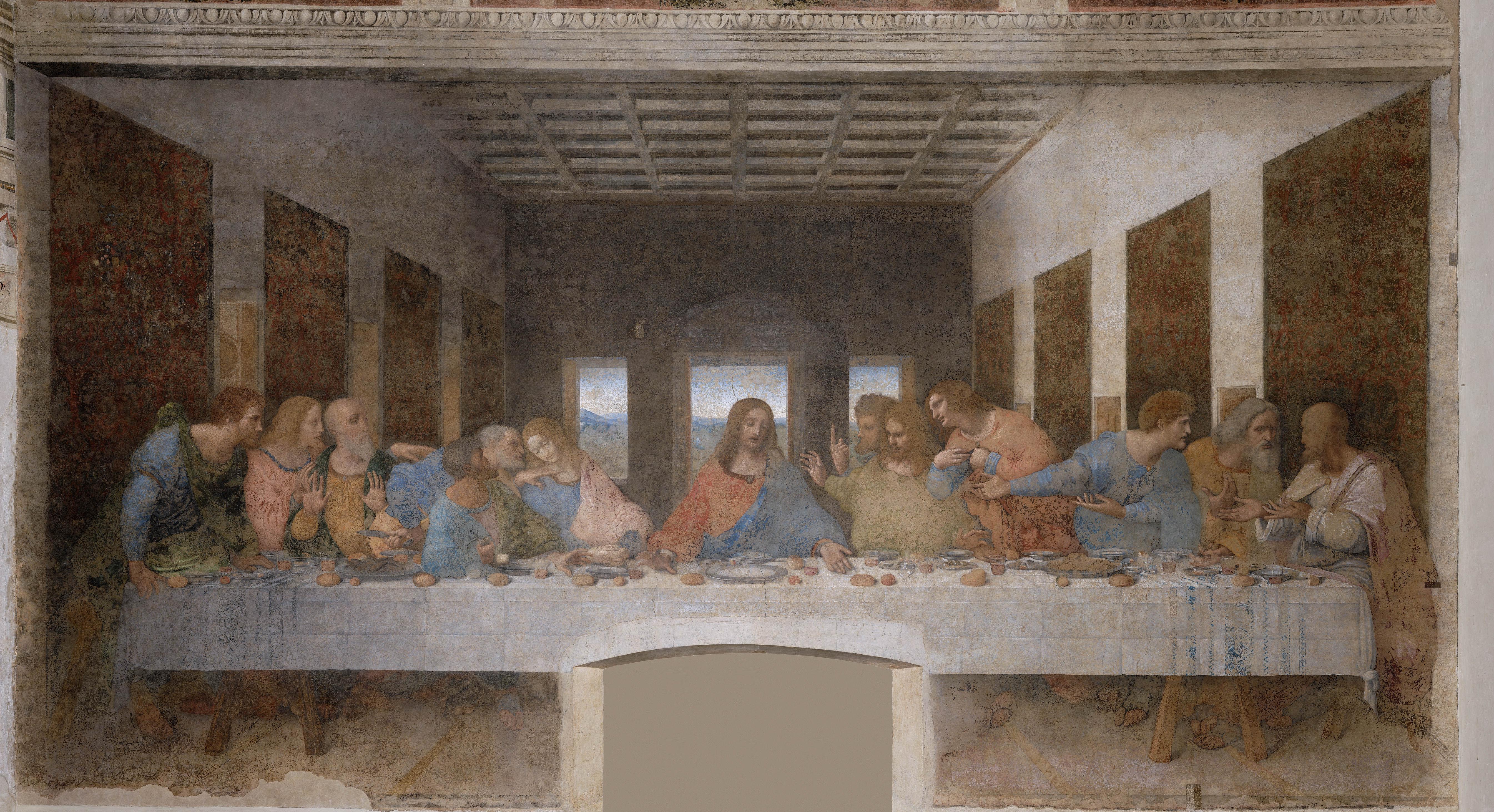
The Last Supper
Il Cenacolo (Italian), L'Ultima Cena

06
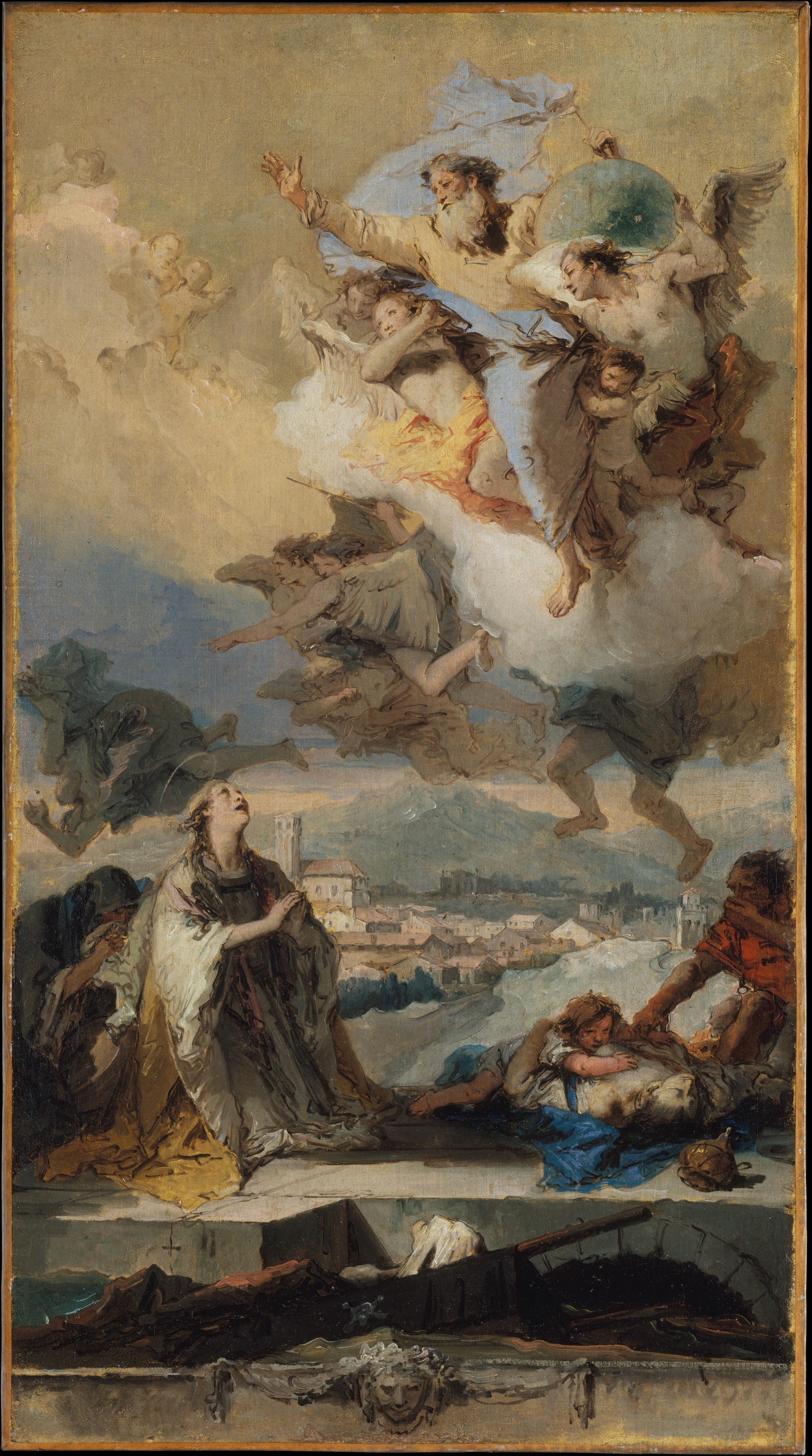
Saint Thecla Praying for the Plague-Stricken
Giovanni Battista Tiepolo Italian
1758–59
On view at The Met Fifth Avenue in Gallery 643
Tiepolo made this oil sketch in preparation for a monumental altarpiece in the cathedral at Este, in northeastern Italy, that commemorates a devastating plague in 1630. Saint Thecla prays to God, who appears in the heavens, on behalf of the city seen in the background. The figure at right covering his mouth against the stench and about to remove a mother’s body is based on works by Raphael and Nicolas Poussin, but Tiepolo depicts him as a man of African descent in a manner consistent with historical evidence. The dangerous task of handling plague‑stricken bodies was often forced on freed or enslaved African and Turkish men. Tiepolo omitted this figure in the final painting.

07
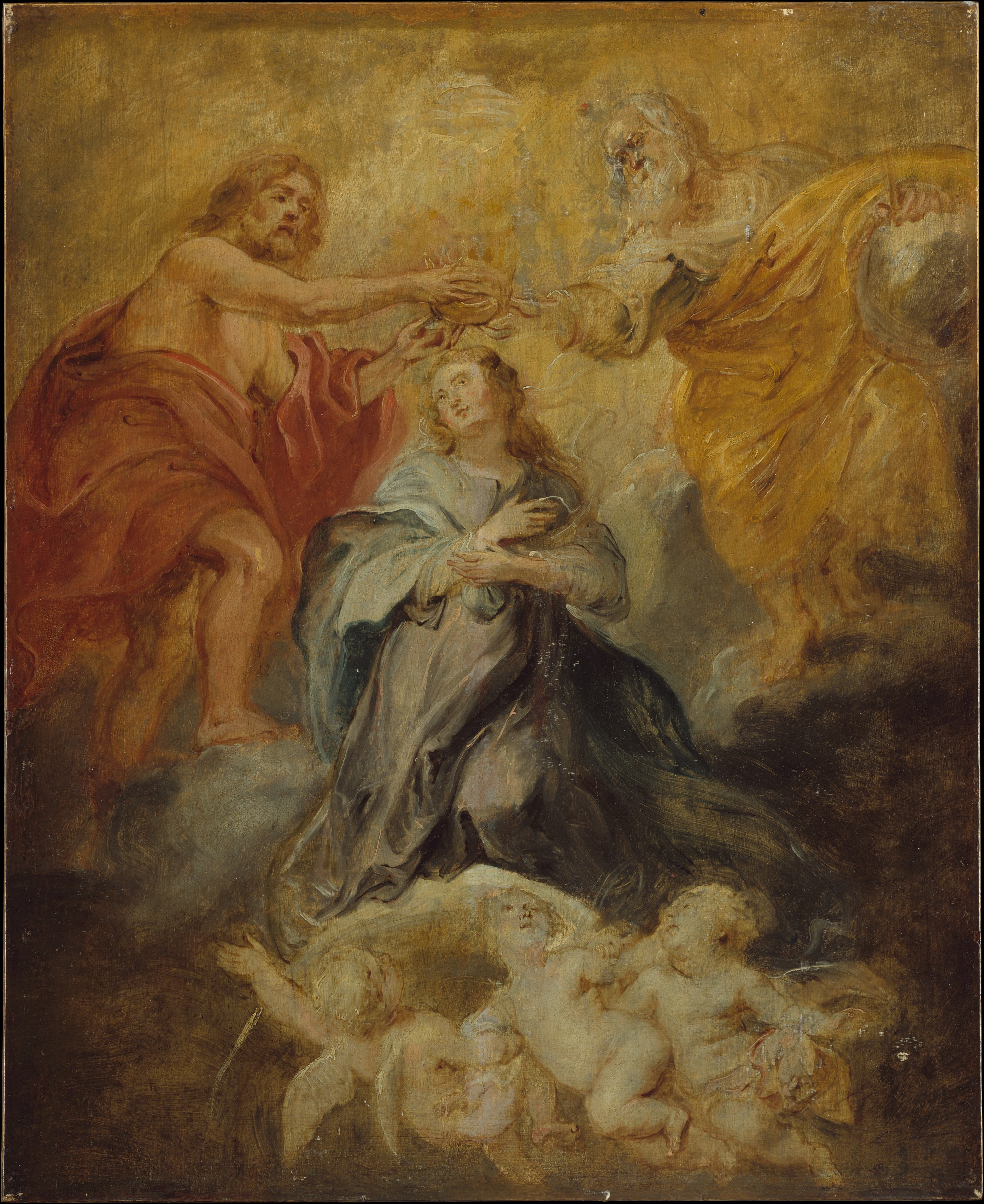
The Coronation of the Virgin
Peter Paul Rubens Flemish
ca. 1632–33
On view at The Met Fifth Avenue in Gallery 639
Rubens made this oil sketch in preparation for a large canvas formerly in Berlin (it was destroyed in 1945). The final composition was proportionately taller, with God the Father moved closer to the Virgin. The wispy application of white highlighting is characteristic of Rubens’s painterly oil sketches.
08
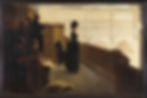
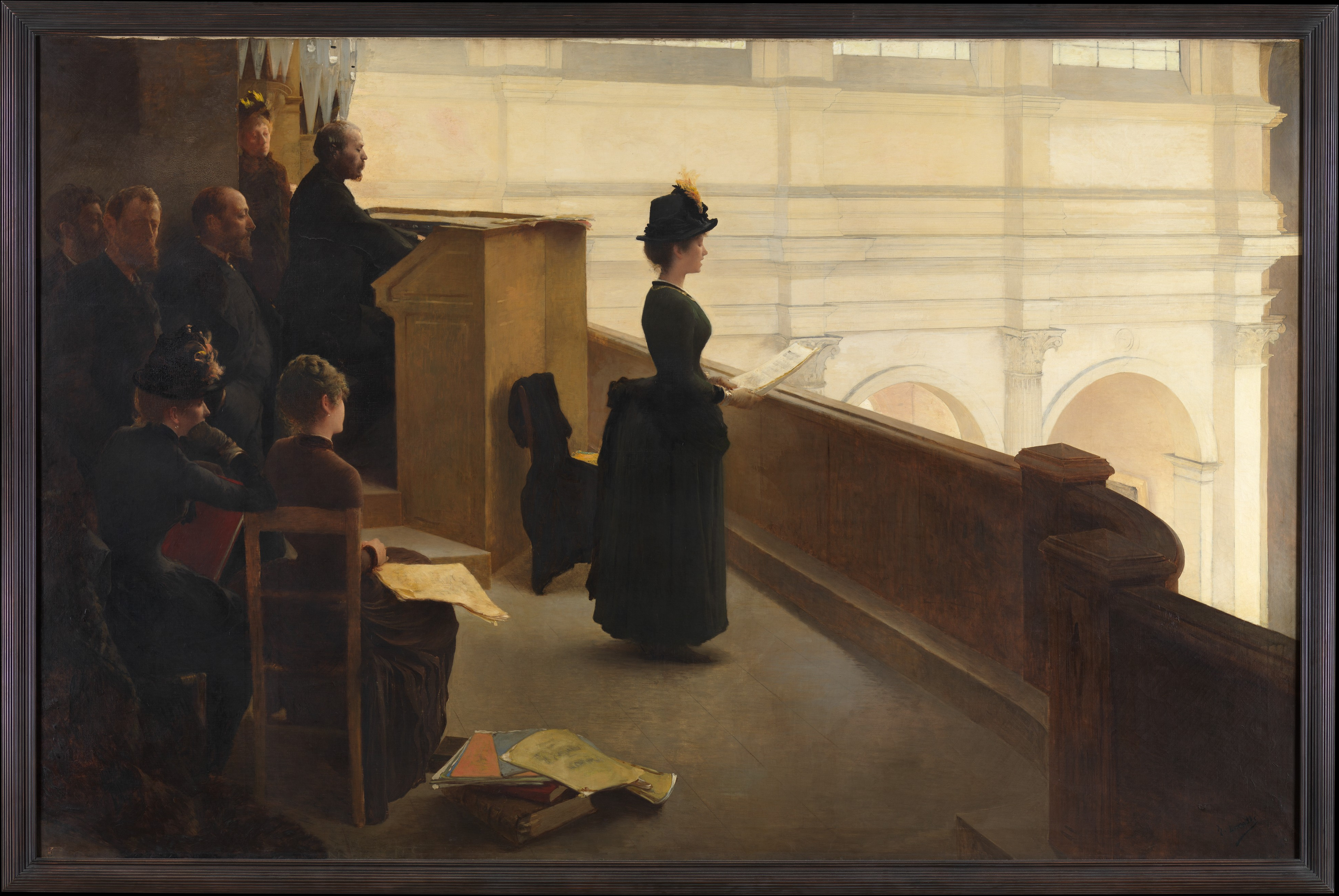
The Organ Rehearsal
Henry Lerolle French
1885
On view at The Met Fifth Avenue in Gallery 684
This is the most important painting by Lerolle, a friend and collector of such artists as Degas, Denis, and Vuillard. Set in the choir loft of the church of Saint-François-Xavier in Paris, it features members of Lerolle’s intimate circle, including his wife (bare-headed) and her sisters, in fashionable matching hats; his brother-in-law, composer Ernest Chausson, plays the organ. The painter himself gazes outward at left. Shown at the Salon of 1885, this picture triumphed the next year in New York, in the first major Impressionism exhibition in America. One critic recalled, "spectators … spoke low before it, as if waiting for … the voice of the singer to be heard."
%20Italian%20ca_%201515%E2%80%9320.jpg)
09
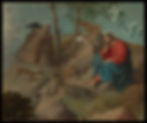
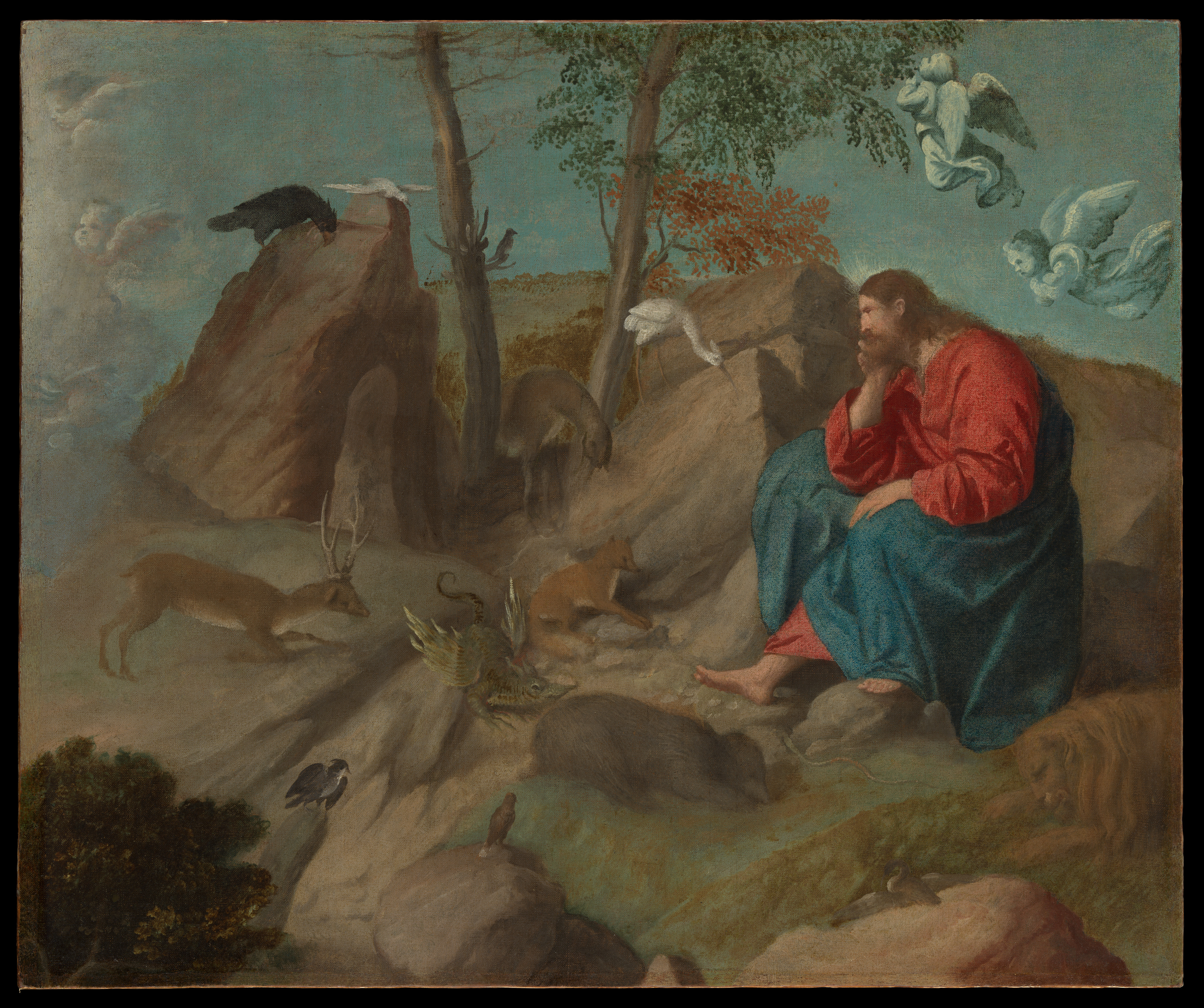
Christ in the Wilderness
Moretto da Brescia (Alessandro Bonvicino) Italian
ca. 1515–20
On view at The Met Fifth Avenue in Gallery 611
According to biblical text, following his baptism, Christ was led into the wilderness by the Holy Spirit, where he fasted for forty days and was "tested by Satan; and was with the wild beasts; and the angels ministered unto him" (Mark 1:13). Moretto imagines Christ steeped in introspective calm, remarkably unfazed as animals mill around him, angels fuss overhead, and a small dragon or basilisk creeps at his feet. This picture is a fragment; at some point someone cut it down at the left and top. To make this less conspicuous, the angels and cherubim were painted over, only to be uncovered more recently by conservators.

10
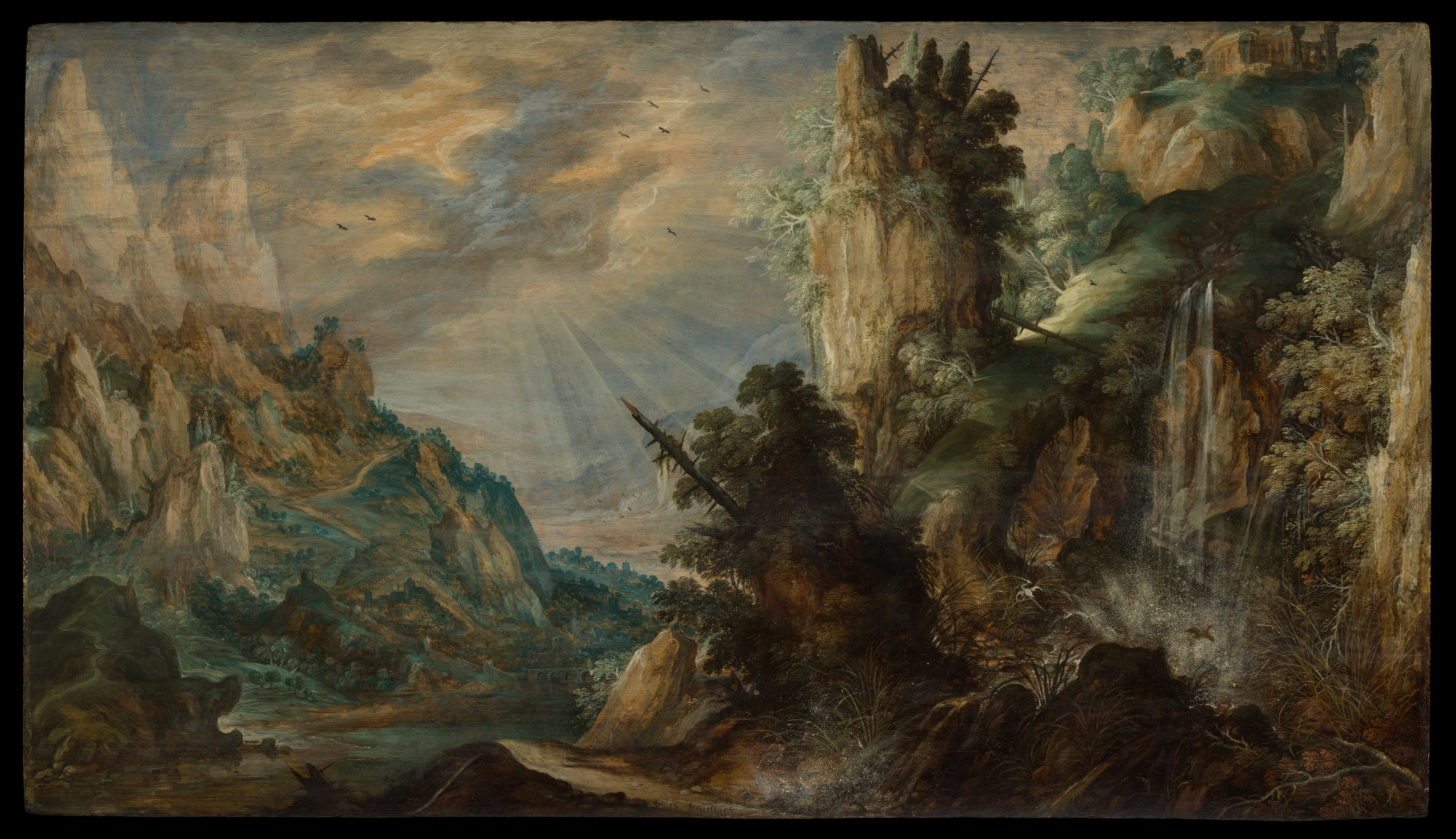
A Mountainous Landscape with a Waterfall
Kerstiaen de Keuninck Flemish
ca. 1600
On view at The Met Fifth Avenue in Gallery 613
De Keuninck continued the Flemish tradition of imaginary mountain scenery that descended from Joachim Patinir. This large panoramic landscape view, dominated by fantastic mountains and rock formations, is an early work by the artist. It employs contrasting pictorial effects—such as heavy passages of opaque paint set off against areas sketched in a very thin medium—and bold motifs like the watery spray formed by flicking the brush against the panel.

11
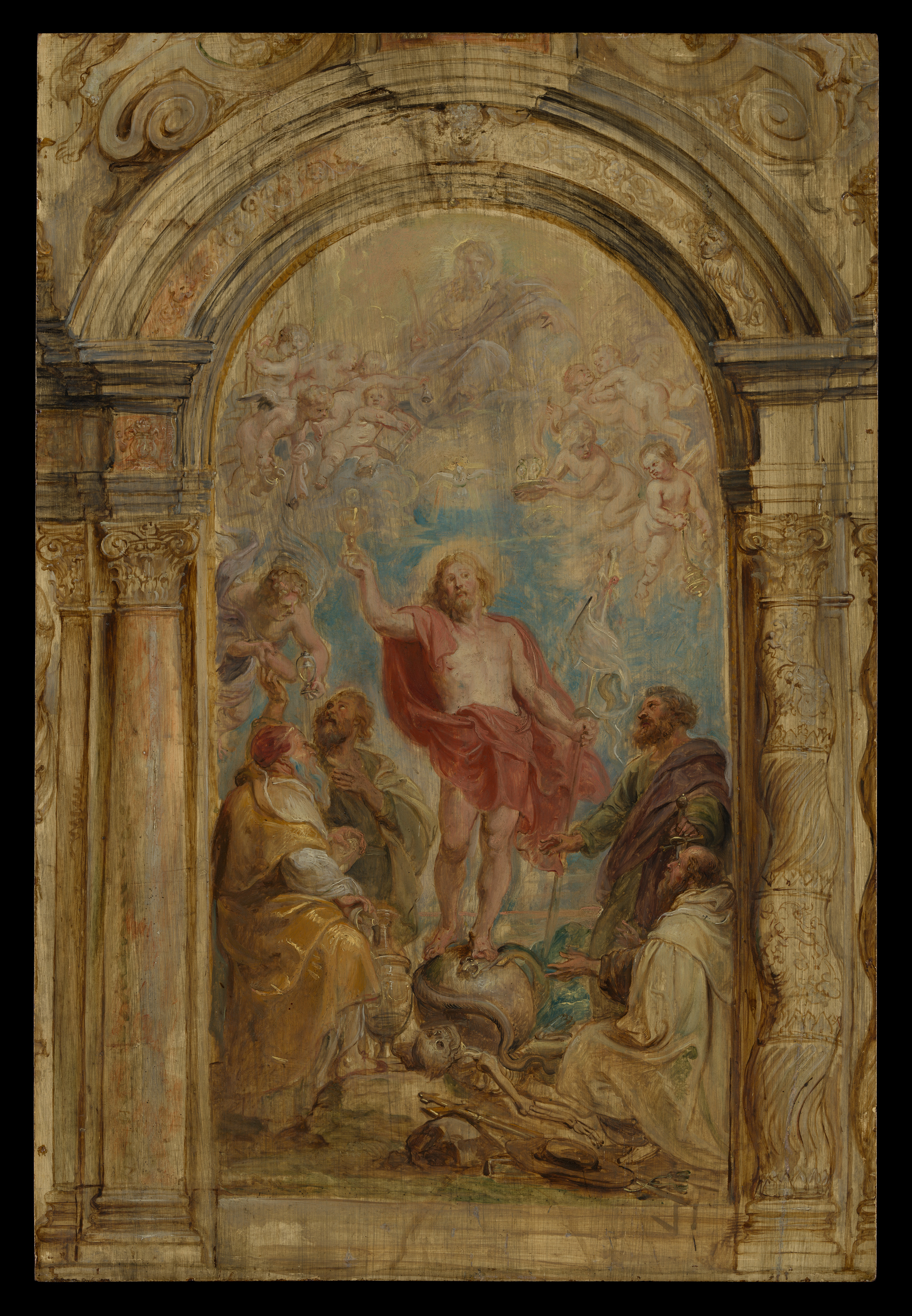
The Glorification of the Eucharist
Peter Paul Rubens Flemish
ca. 1630–32
On view at The Met Fifth Avenue in Gallery 639
This oil sketch is Rubens’s design for an altarpiece ensemble in the church of the Calced Carmelites in Antwerp, which was executed in 1637–38 by the painter Gerard Seghers and the sculptor Hans van Mildert. The risen Christ triumphs over sin and death (the snake and skeleton), and is flanked from left to right by Melchizedek, Elijah, Saint Paul, and Saint Cyril of Alexandria, who were all associated with the Eucharist. In the columns and upper corners of the panel, Rubens offers the patron a choice of architectural motifs.
%20Netherlandish%20ca_%201585.jpg)
12
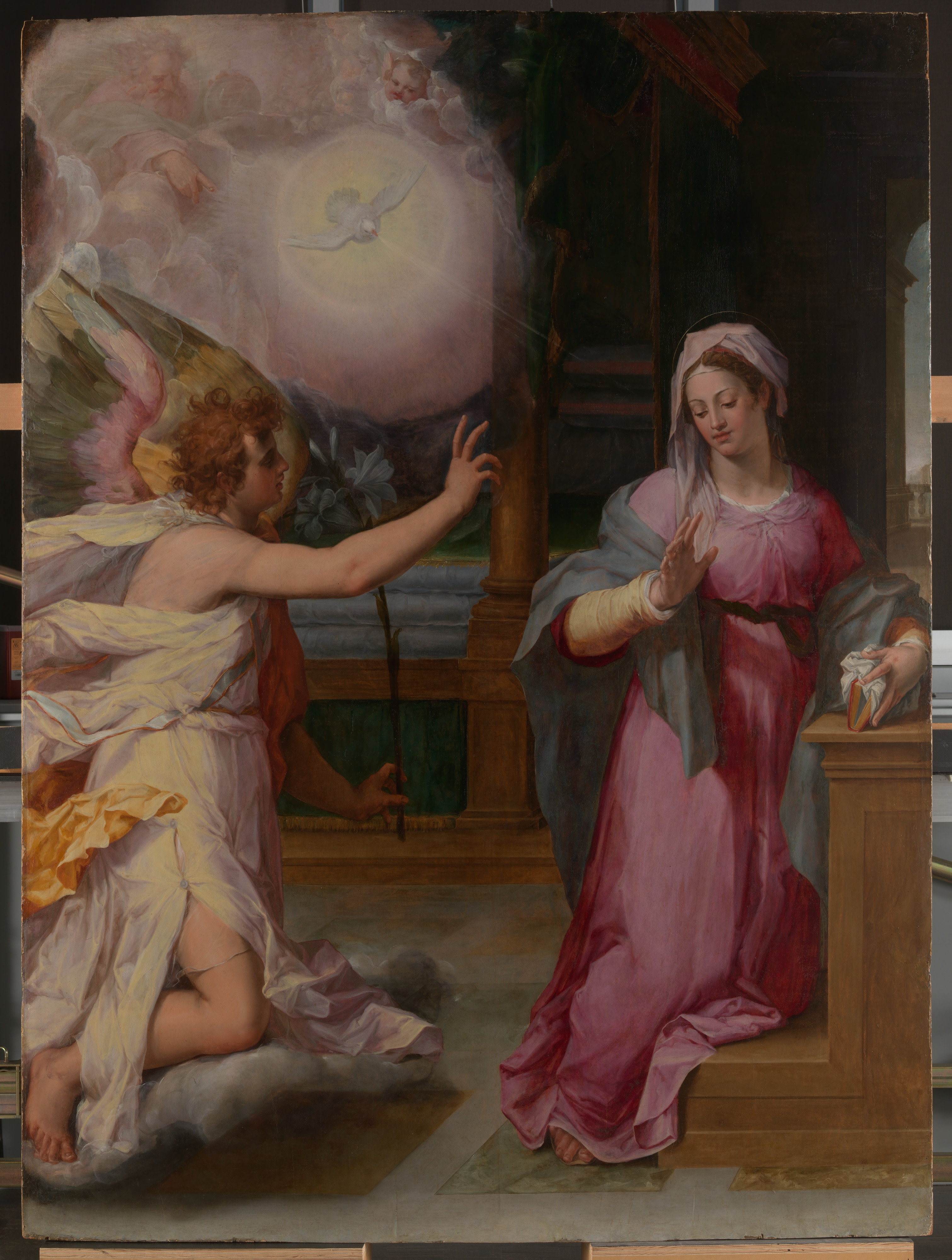
The Annunciation
Peter Candid (Pieter de Witte, Pietro Candido) Netherlandish
ca. 1585
On view at The Met Fifth Avenue in Gallery 609
Candid (or Candido) was born in Bruges and trained in Florence, where he began his career as a painter and designer of tapestries. In this grand altarpiece, the angel Gabriel along with God the Father and the Holy Spirit rush into Mary’s bedroom in a blaze of light and color as they announce that she will bear a child. The artist painted it for a small church or oratory in the country to the south of Florence soon before he left Italy for Munich, where he became court painter to the dukes of Bavaria.

13
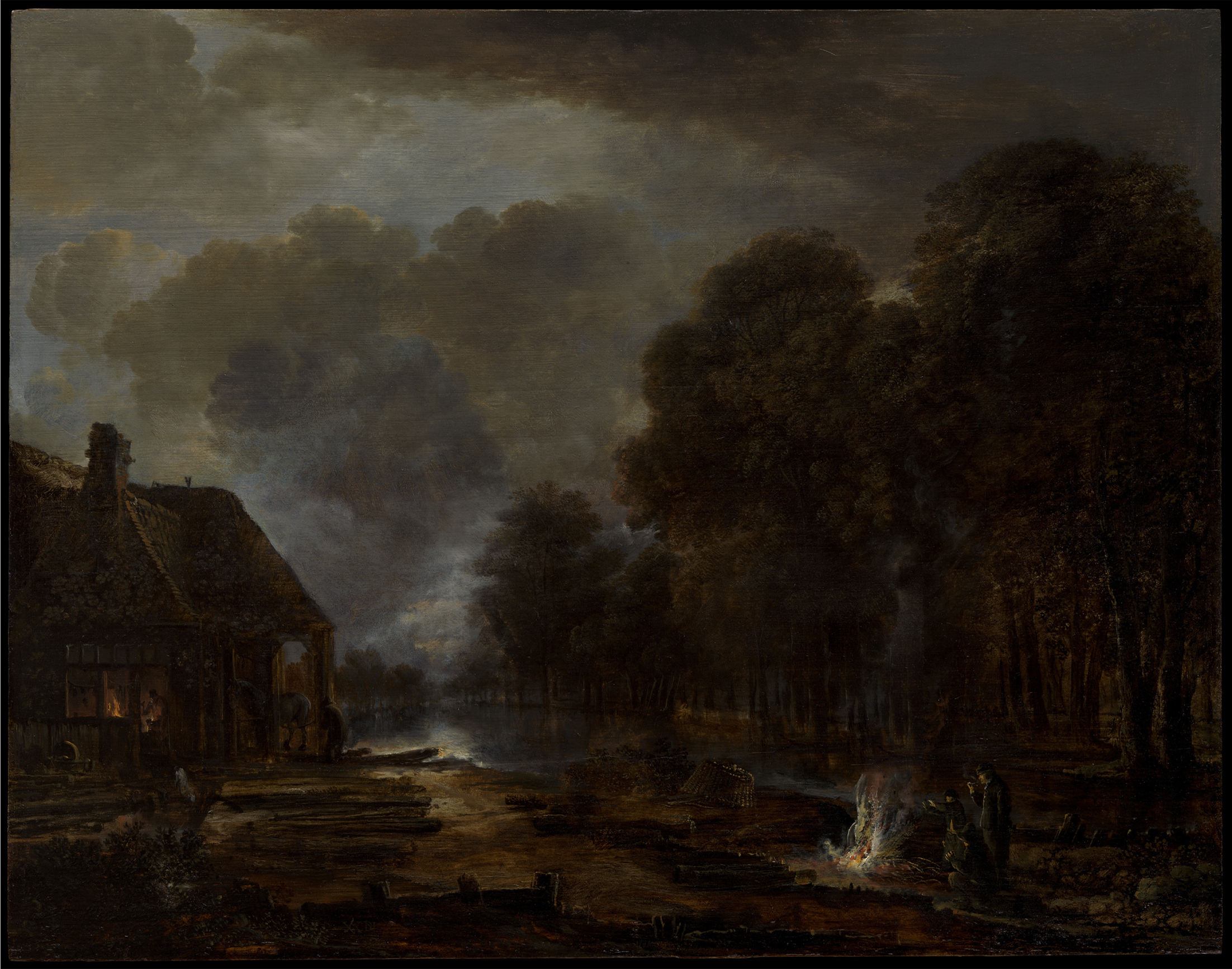
"The Farrier"
by Aert van der Neer Dutch
From early or mid-1650s
On view at The Met Fifth Avenue in Gallery 615.
Van der Neer’s preoccupation with light effects in nature led him to paint dozens of nocturnal views. In this case the warm light of a forge and a bonfire set off the cool glow and reflections of the moon. Recent conservation treatment has revealed the buttery yellow of the moon and the bright orange glow of the forge.
_%20by%20Simon%20Denis%20Flemish.jpg)
14
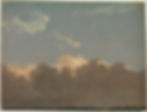
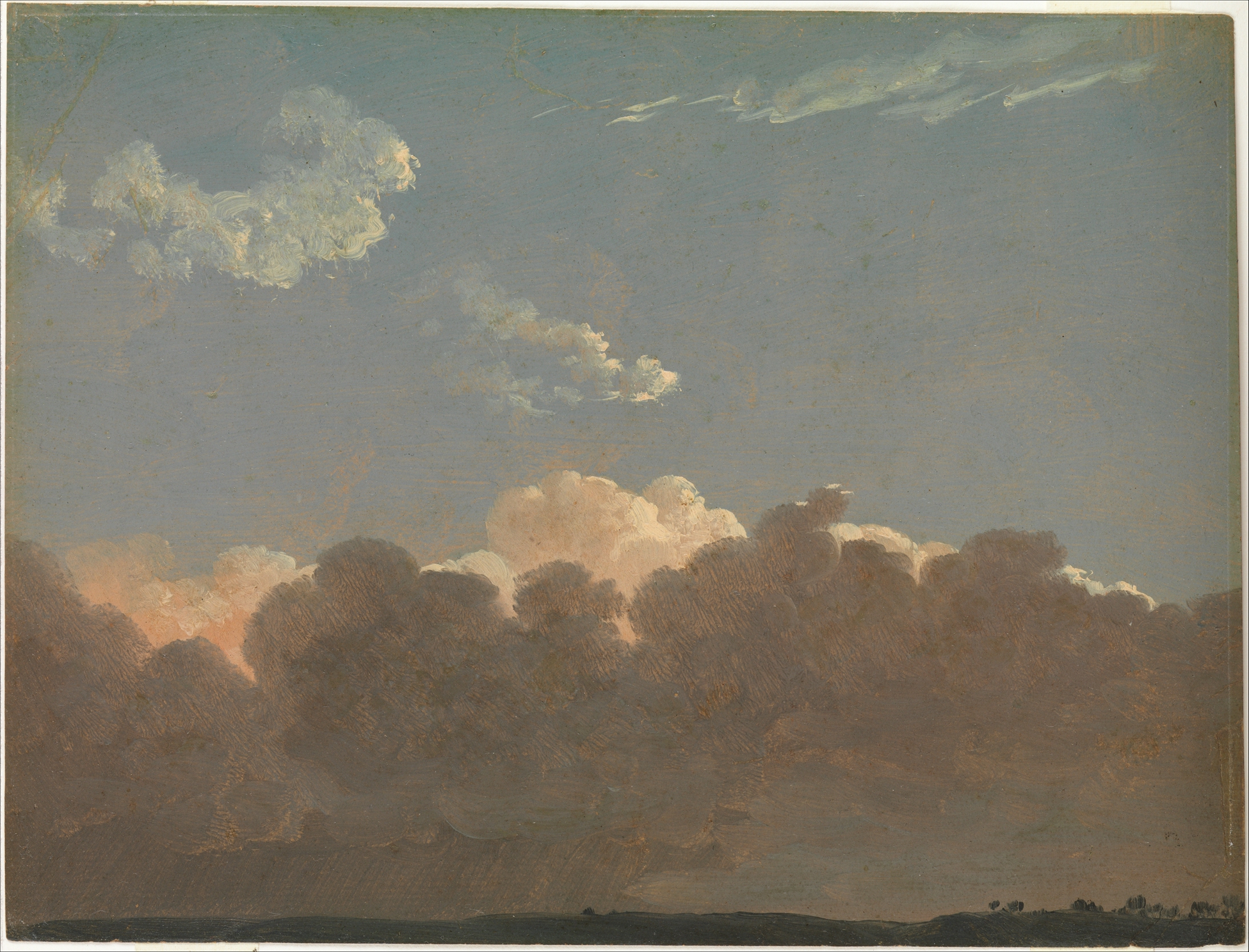
"Cloud Study (Distant Storm)" by Simon Denis Flemish
ca. 1786–1806
On view at The Met Fifth Avenue in Gallery 805
This study shows a range of climatic conditions stacked one above the other. It lightens progressively over a space that extends thousands of feet, from the rainstorm at lower left to the clear sky at top. Denis’s plein-air sketches epitomize the Enlightenment’s embrace of empirical research in the pursuit of knowledge. The artist employed the particular effect seen here in finished paintings of the 1790s, and perhaps earlier.

15
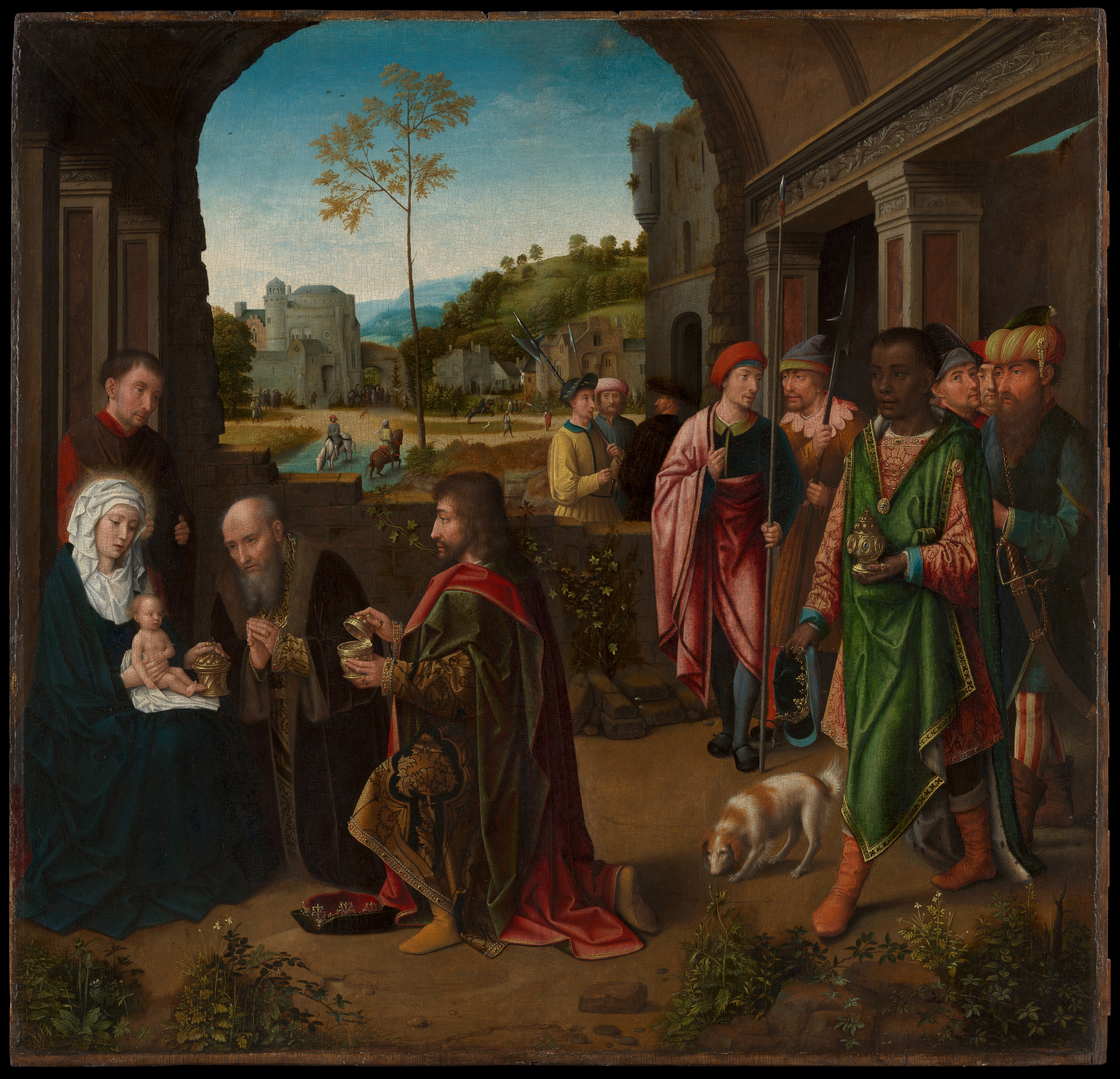
"The Adoration of the Magi" by
Gerard David Netherlandish
ca. 1520
On view at The Met Fifth Avenue in Gallery 537
First established in Bruges, Gerard David also joined the painter’s guild in Antwerp in 1515, where his compositions and motifs soon began to circulate. This excellently preserved panel is strongly indebted to David’s work. The extravagantly dressed onlookers, however, are a pure invention of Antwerp art, as is the landscape view with travelers carrying goods for trade. Due to Antwerp’s status as the mercantile center for Northern Europe, scenes of the Adoration of the Magi were particularly popular in the city. They served not only a devotional use, but could also be associated with the travel of foreign goods.
01 / 15
The Virgin Adoring the Host
Jean Auguste Dominique Ingres French
1852
On view at The Met Fifth Avenue in Gallery 801
Ingres made this small, jewellike devotional painting as a gift for his friend Louise Marcotte; she introduced the artist to Delphine Ramel, whom he married in 1852. The Virgin appears behind an altar table, flanked by two saints in adoration of the Eucharist. The composition pays homage to the long tradition of intimate paintings made for religious devotion, particularly the art of Raphael from the early 1500s.
01
The Virgin Adoring the Host
Jean Auguste Dominique Ingres French
1852
On view at The Met Fifth Avenue in Gallery 801
Ingres made this small, jewellike devotional painting as a gift for his friend Louise Marcotte; she introduced the artist to Delphine Ramel, whom he married in 1852. The Virgin appears behind an altar table, flanked by two saints in adoration of the Eucharist. The composition pays homage to the long tradition of intimate paintings made for religious devotion, particularly the art of Raphael from the early 1500s.
02
Christ Crucified with the Virgin Mary, St John, Mary Magdalene and Soldiers, ca. 1640
After Anthony Van Dyck (1599 - 1641)
03
Nativity
Aegidius Sadeler II Netherlandish
After Hans von Aachen German
Publisher Paulus Fürst German
1588
04
The Nativity
Bartolomé Estebán Murillo Spanish
ca. 1665–70
One of the best known of all Spanish artists, Murillo spent most of his life in Seville, where he established an important drawing school. Many sheets from his hand have survived. This drawing is typical of the finished compositions he made late in his career. It is carefully signed in the lower left, and the letters "fe" after his surname are an abbreviation of the Latin fecit, or "made by." Many of Murillo’s drawings were preparatory sketches for paintings. However, given his fame and his role as a teacher, it is possible that he made this drawing as an independent work, perhaps to be sold to a collector.
05
The Last Supper
Il Cenacolo (Italian), L'Ultima Cena
06
Saint Thecla Praying for the Plague-Stricken
Giovanni Battista Tiepolo Italian
1758–59
On view at The Met Fifth Avenue in Gallery 643
Tiepolo made this oil sketch in preparation for a monumental altarpiece in the cathedral at Este, in northeastern Italy, that commemorates a devastating plague in 1630. Saint Thecla prays to God, who appears in the heavens, on behalf of the city seen in the background. The figure at right covering his mouth against the stench and about to remove a mother’s body is based on works by Raphael and Nicolas Poussin, but Tiepolo depicts him as a man of African descent in a manner consistent with historical evidence. The dangerous task of handling plague‑stricken bodies was often forced on freed or enslaved African and Turkish men. Tiepolo omitted this figure in the final painting.
07
The Coronation of the Virgin
Peter Paul Rubens Flemish
ca. 1632–33
On view at The Met Fifth Avenue in Gallery 639
Rubens made this oil sketch in preparation for a large canvas formerly in Berlin (it was destroyed in 1945). The final composition was proportionately taller, with God the Father moved closer to the Virgin. The wispy application of white highlighting is characteristic of Rubens’s painterly oil sketches.
08
The Organ Rehearsal
Henry Lerolle French
1885
On view at The Met Fifth Avenue in Gallery 684
This is the most important painting by Lerolle, a friend and collector of such artists as Degas, Denis, and Vuillard. Set in the choir loft of the church of Saint-François-Xavier in Paris, it features members of Lerolle’s intimate circle, including his wife (bare-headed) and her sisters, in fashionable matching hats; his brother-in-law, composer Ernest Chausson, plays the organ. The painter himself gazes outward at left. Shown at the Salon of 1885, this picture triumphed the next year in New York, in the first major Impressionism exhibition in America. One critic recalled, "spectators … spoke low before it, as if waiting for … the voice of the singer to be heard."
09
Christ in the Wilderness
Moretto da Brescia (Alessandro Bonvicino) Italian
ca. 1515–20
On view at The Met Fifth Avenue in Gallery 611
According to biblical text, following his baptism, Christ was led into the wilderness by the Holy Spirit, where he fasted for forty days and was "tested by Satan; and was with the wild beasts; and the angels ministered unto him" (Mark 1:13). Moretto imagines Christ steeped in introspective calm, remarkably unfazed as animals mill around him, angels fuss overhead, and a small dragon or basilisk creeps at his feet. This picture is a fragment; at some point someone cut it down at the left and top. To make this less conspicuous, the angels and cherubim were painted over, only to be uncovered more recently by conservators.
10
A Mountainous Landscape with a Waterfall
Kerstiaen de Keuninck Flemish
ca. 1600
On view at The Met Fifth Avenue in Gallery 613
De Keuninck continued the Flemish tradition of imaginary mountain scenery that descended from Joachim Patinir. This large panoramic landscape view, dominated by fantastic mountains and rock formations, is an early work by the artist. It employs contrasting pictorial effects—such as heavy passages of opaque paint set off against areas sketched in a very thin medium—and bold motifs like the watery spray formed by flicking the brush against the panel.
11
The Glorification of the Eucharist
Peter Paul Rubens Flemish
ca. 1630–32
On view at The Met Fifth Avenue in Gallery 639
This oil sketch is Rubens’s design for an altarpiece ensemble in the church of the Calced Carmelites in Antwerp, which was executed in 1637–38 by the painter Gerard Seghers and the sculptor Hans van Mildert. The risen Christ triumphs over sin and death (the snake and skeleton), and is flanked from left to right by Melchizedek, Elijah, Saint Paul, and Saint Cyril of Alexandria, who were all associated with the Eucharist. In the columns and upper corners of the panel, Rubens offers the patron a choice of architectural motifs.
12
The Annunciation
Peter Candid (Pieter de Witte, Pietro Candido) Netherlandish
ca. 1585
On view at The Met Fifth Avenue in Gallery 609
Candid (or Candido) was born in Bruges and trained in Florence, where he began his career as a painter and designer of tapestries. In this grand altarpiece, the angel Gabriel along with God the Father and the Holy Spirit rush into Mary’s bedroom in a blaze of light and color as they announce that she will bear a child. The artist painted it for a small church or oratory in the country to the south of Florence soon before he left Italy for Munich, where he became court painter to the dukes of Bavaria.
13
"The Farrier"
by Aert van der Neer Dutch
From early or mid-1650s
On view at The Met Fifth Avenue in Gallery 615.
Van der Neer’s preoccupation with light effects in nature led him to paint dozens of nocturnal views. In this case the warm light of a forge and a bonfire set off the cool glow and reflections of the moon. Recent conservation treatment has revealed the buttery yellow of the moon and the bright orange glow of the forge.
14
"Cloud Study (Distant Storm)" by Simon Denis Flemish
ca. 1786–1806
On view at The Met Fifth Avenue in Gallery 805
This study shows a range of climatic conditions stacked one above the other. It lightens progressively over a space that extends thousands of feet, from the rainstorm at lower left to the clear sky at top. Denis’s plein-air sketches epitomize the Enlightenment’s embrace of empirical research in the pursuit of knowledge. The artist employed the particular effect seen here in finished paintings of the 1790s, and perhaps earlier.
15
"The Adoration of the Magi" by
Gerard David Netherlandish
ca. 1520
On view at The Met Fifth Avenue in Gallery 537
First established in Bruges, Gerard David also joined the painter’s guild in Antwerp in 1515, where his compositions and motifs soon began to circulate. This excellently preserved panel is strongly indebted to David’s work. The extravagantly dressed onlookers, however, are a pure invention of Antwerp art, as is the landscape view with travelers carrying goods for trade. Due to Antwerp’s status as the mercantile center for Northern Europe, scenes of the Adoration of the Magi were particularly popular in the city. They served not only a devotional use, but could also be associated with the travel of foreign goods.
- virgin adoring the host catholic mother mary catholic christian painting blue royal regal
- crucifixion of christ sketch virgin mary st john mary magdalene soldiers foot of the cross mournful grief sad art
- nativity scene jesus christ born birth virgin mary sketch pencil graphite angels heaven saints three magi wise men joy art
- nativity scene calm jesus christ mary virgin joseph angels cherub sketch art
- the last supper painting leonardo jesus christ followers disciples meal dinner sharing painting artwork catholic
- plague painting angel saint praying suffering art
- coronation of queen of heaven virgin mary mother regina caeli jesus christ god almighty crown crowning painting art angels heaven clouds
- choir organ loft musicians art practice rehearsal painting church
- christ in the wilderness animals angels desert painting art
- landscape impressive fantasy mountains river forests sky clouds sunrays painting art
- christ glorified eucharist triumphant challis gold painting angels art
- annunciation angel virgin mother mary greeting dove holy spirit painting art

bottom of page